Lifeguards

Llandudno Beach is one of the Cape’s most naturally diverse beaches, surrounded by large granite boulders and overlooked by mountains. It is a popular surfing spot, but the swimming can be treacherous, with rough seas and extremely cold water. Llandudno has lifeguards on duty during the summer season, operated by the Llandudno Surf Lifesaving club. It is also the access point for the walk to Sandy Bay, an isolated beach still popular with nudists. On 26 September 1903 the valley was declared a township and named Llandudno after the North Wales seaside resort of Llandudno, which means “Parish of Saint Tudno” in the Welsh language. The striking similarities between Kleinkommetjie Bay in which the valley resides and Llandudno in Wales were noted as reasons for choosing this name.
Info source: https://en.wikipedia.org/wiki/Llandudno,_Cape_Town
=========
The photo was taken during October 2014 at Llandudno, Western Cape, South Africa.

Lifeguards

Retracted

Retracted
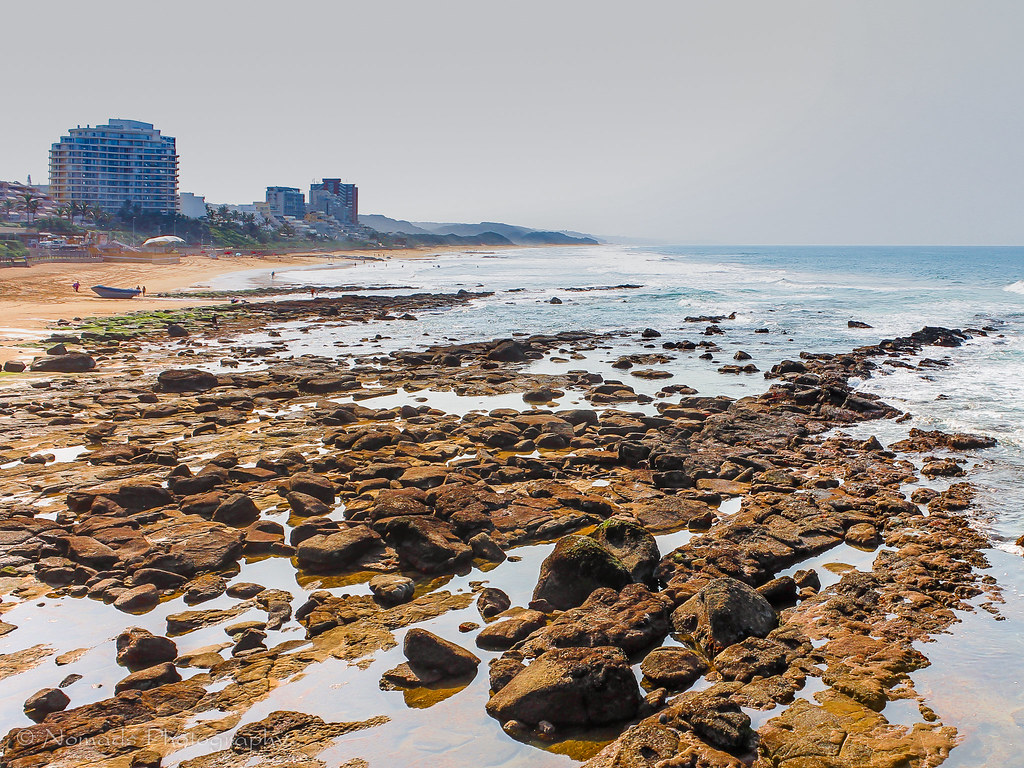
High and low tides are caused by the moon. The moon’s gravitational pull generates something called the tidal force. The tidal force causes Earth—and its water—to bulge out on the side closest to the moon and the side farthest from the moon. These bulges of water are high tides.
* One cycle of tides actually takes 24 hours and 50 minutes.
* The highest tides occur when the moon is new or full.
* High tides sometimes occur either before or after the moon is straight overhead.
* Sometimes there are really low tides called neap tides.
* Some places have only one high tide and one low tide in a cycle (24 hours and 50 minutes).
Info source: https://scijinks.gov/tides/
=========
The photo was taken during June 2014 at Cabana Beach Lifestyle Resort, Umhlanga Rocks, KwaZulu-Natal, South Africa.

Retracted

Annoyed

Hippotamus, plural Hippopotami or commonly named Hippos in South Africa are found mainly in protected areas, private game reserves and the Kruger National Park. They also occur outside of these areas especially in rivers in the northwestern, northern, northeastern as well as in the eastern parts (northern KwaZulu-Natal). Hippos need permanent open water like rivers, dams, or pools in rivers where they can submerge, with sandbanks where they can bask in the sun for periods of time. They also need enough grazing grass in the area. Hippos are semi-aquatic and gregarious animals. They gather or form pods of up to 30 animals or more depending on the water level and time of the season. Hippo pods consist mainly of cows and young hippos with a matriarch and a dominant (territorial) bull in control of the territory. Single bulls are also often found. Cows with very young calves often stay on their own for a few months before rejoining the pod. Hippos spend their days resting mainly in the water although in winter and on cool days might be resting on sandbanks and basking in the sun especially in winter months. They feed mainly at night.

Info source: http://www.wildlifesouthafrica.com/blog/mammals-of-south-africa/hippopotamus-hippo-fact-file

The photo was taken during January 2014 Mabula Private Game Reserve, Rooiberg, Limpopo, South Africa.

Annoyed