Interested

The flehmen response is a behaviour in which an animal curls back its upper lip exposing its front teeth, inhales with the nostrils usually closed, and then often holds this position for several seconds. It may be performed over a site or substance of particular interest to the animal or may be performed with the neck stretched and the head held high in the air. Flehmen is performed by a wide range of mammals, including ungulates and felids. The behaviour facilitates the transfer of pheromones and other scents into the vomeronasal organ located above the roof of the mouth via a duct which exits just behind the front teeth of the animal. The flehmen response often gives the appearance that the animal is looking spiteful, grimacing, smirking or laughing. A wide range of mammals exhibits flehmen including both predatory and non-predatory species. The response is perhaps most easily observed in domestic cats and horses; both exhibit a strong flehmen response to odours. Other animals which exhibit the flehmen response include zebra, elephant, buffalo, tigers, tapirs, lions, giraffes, goats, llamas, kobs, hedgehogs, rhinoceros, giant pandas, and hippopotami.
Info source: https://en.wikipedia.org/wiki/Flehmen_response
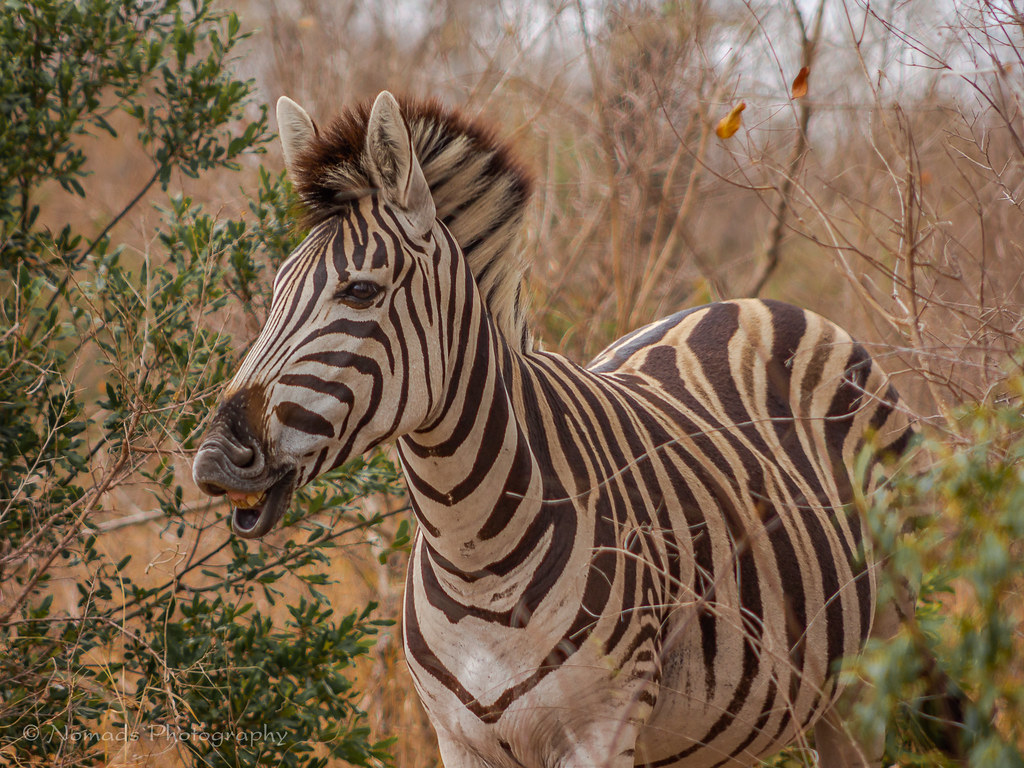
Interested

Old-timers

As buffalo get older and their reproduction peaks pass males will often be chased from the larger herds and are often found in small groups or on their own. These animals then get the nickname Dagha boys. Dagha is the Zulu name for mud and refers to the buffalo spending a lot of their past time in mud wallows. Buffalo are very easily recognizable on a game drive as they are a large ox-like looking animal with very large bossed horns. Buffalo are dimorphic which means there is little difference between the male and the female. Male buffalo are often covered in mud and their bosses met in the middle of their head to form a helmet-like structure on the head. Younger bulls often still have hairs on their horns.
Info source: https://hluhluwegamereserve.com/african-big-5/cape-buffalo/

Old-timers

Teenager

Waterbuck calves are kept hidden for two to three weeks or even two months. At about three to four weeks, the calf begins following its mother, who signals it to do so by raising her tail. Though bereft of horns, mothers will fiercely defend their offspring from predators. Calves are weaned at eight months, following which time they join groups of calves of their own age. Young females remain with their mothers in nursery herds, or may also join bachelor herds. The waterbuck live to 18 years in the wild and 30 years in captivity. As soon as young males start developing horns (at around seven to nine months of age), they are chased out of the herd by territorial bulls. These males then form bachelor herds and may roam in female home ranges.
Info source: https://en.wikipedia.org/wiki/Waterbuck

Teenager