Grooming

The Impala is a gregarious antelope species encountered in large numbers. Impalas have developed a number of adaptations that allow them to thrive. Grooming and tick removal are high on the list of survival skills. The Impala is the only hoofed animal that does allogrooming – mutual grooming from one animal to another – as well as grooming itself. A herbivorous species, the Impala has adapted to graze and browse, thereby maximising the availability of food. Impala will feed on grasses and herbs, as well as the leaves of bushes and shrubs. The impala makes guttural grunts which are audible for a great distance. An alert impala will bark out an alarm that puts the entire herd to flight – and a fleeing impala is hard to catch. Impalas are very fast runners able to leap distances of up to 10 meters. They use this technique to escape predators and sometimes, it seems, simply to amuse themselves.
=========
The photo was taken during February 2019 at Bushtime at Mabula, Bela-Bela, Limpopo, South Africa.
Info source: https://www.sabisabi.com/wildfacts/impala/

Grooming

Ruffled

The Goliath Heron has a height of 135 cms and weighs around 4300 gms. The head is coloured chestnut while the bill is coloured black. The Goliath Heron is found in the Southern African wetlands, riverine forests and moist grasslands. The bird is at home in riverine forests and close to water bodies such as lakes, dams and streams. You can see the Goliath Heron bird on coastal regions and on the seashore where the bird will be foraging with other birds. This bird forages for food on the ground. This bird has a specially adapted bill which helps it hunt for fish, crabs, shrimp and other aquatic animals in the water. This bird eats insects such as butterflies, bees, wasps, locusts and ants. These invertebrates are usually hawked aerially, killed and then eaten.
Info source: http://www.birdsinsa.com/birds/ardeagoliath.htm

Ruffled

Interested

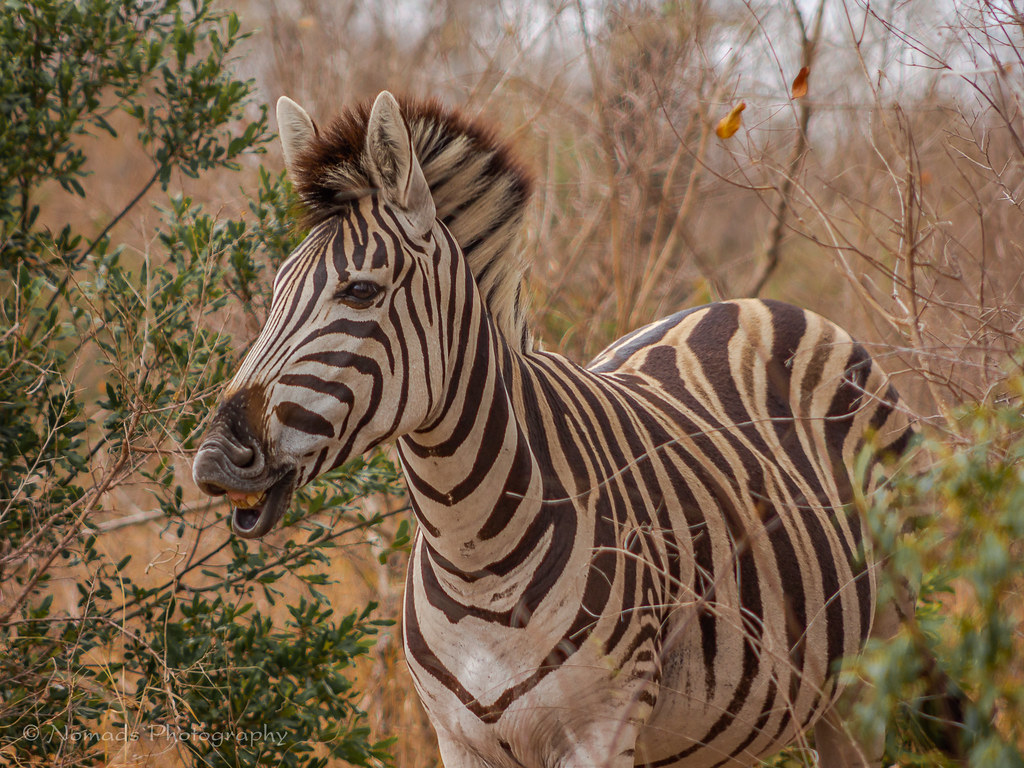
The flehmen response is a behaviour in which an animal curls back its upper lip exposing its front teeth, inhales with the nostrils usually closed, and then often holds this position for several seconds. It may be performed over a site or substance of particular interest to the animal or may be performed with the neck stretched and the head held high in the air. Flehmen is performed by a wide range of mammals, including ungulates and felids. The behaviour facilitates the transfer of pheromones and other scents into the vomeronasal organ located above the roof of the mouth via a duct which exits just behind the front teeth of the animal. The flehmen response often gives the appearance that the animal is looking spiteful, grimacing, smirking or laughing. A wide range of mammals exhibits flehmen including both predatory and non-predatory species. The response is perhaps most easily observed in domestic cats and horses; both exhibit a strong flehmen response to odours. Other animals which exhibit the flehmen response include zebra, elephant, buffalo, tigers, tapirs, lions, giraffes, goats, llamas, kobs, hedgehogs, rhinoceros, giant pandas, and hippopotami.
Info source: https://en.wikipedia.org/wiki/Flehmen_response

Interested