Lifeguards

Llandudno Beach is one of the Cape’s most naturally diverse beaches, surrounded by large granite boulders and overlooked by mountains. It is a popular surfing spot, but the swimming can be treacherous, with rough seas and extremely cold water. Llandudno has lifeguards on duty during the summer season, operated by the Llandudno Surf Lifesaving club. It is also the access point for the walk to Sandy Bay, an isolated beach still popular with nudists. On 26 September 1903 the valley was declared a township and named Llandudno after the North Wales seaside resort of Llandudno, which means “Parish of Saint Tudno” in the Welsh language. The striking similarities between Kleinkommetjie Bay in which the valley resides and Llandudno in Wales were noted as reasons for choosing this name.
Info source: https://en.wikipedia.org/wiki/Llandudno,_Cape_Town
=========
The photo was taken during October 2014 at Llandudno, Western Cape, South Africa.

Lifeguards

Retracted

Retracted
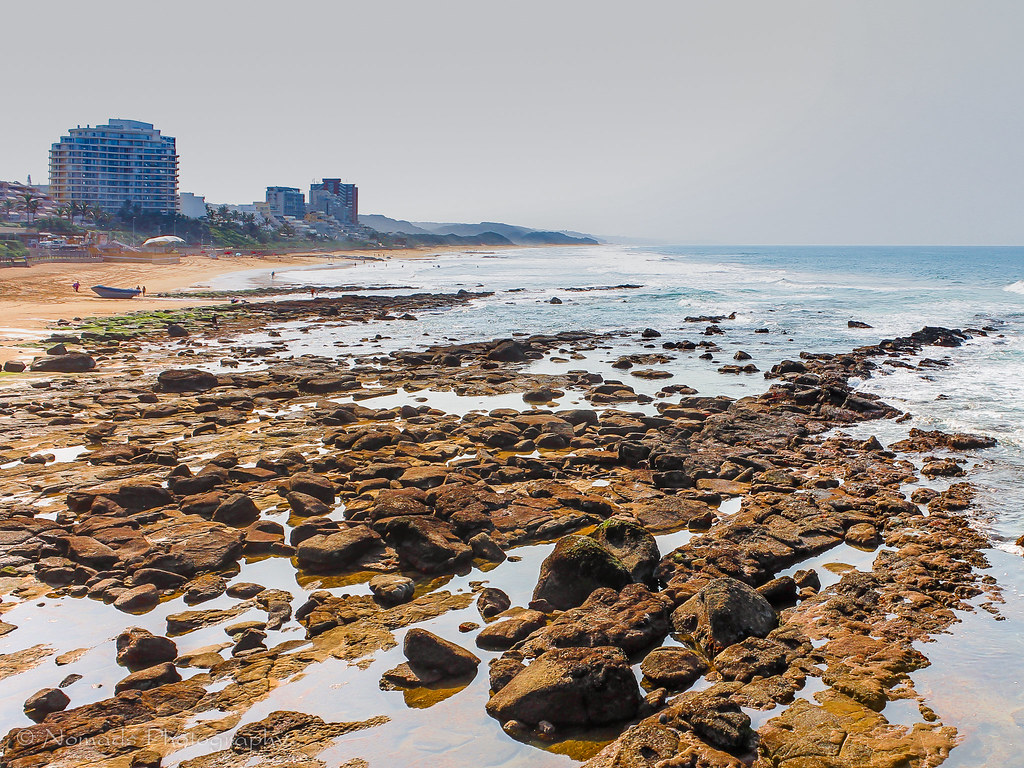
High and low tides are caused by the moon. The moon’s gravitational pull generates something called the tidal force. The tidal force causes Earth—and its water—to bulge out on the side closest to the moon and the side farthest from the moon. These bulges of water are high tides.
* One cycle of tides actually takes 24 hours and 50 minutes.
* The highest tides occur when the moon is new or full.
* High tides sometimes occur either before or after the moon is straight overhead.
* Sometimes there are really low tides called neap tides.
* Some places have only one high tide and one low tide in a cycle (24 hours and 50 minutes).
Info source: https://scijinks.gov/tides/
=========
The photo was taken during June 2014 at Cabana Beach Lifestyle Resort, Umhlanga Rocks, KwaZulu-Natal, South Africa.

Retracted

Eject

The vivid black-and-white markings of the African sacred ibis certainly ensure that this bird stands in stark contrast to the greens, browns and blues of the South African landscapes. They have the same silhouette as their hadeda relatives but are undoubtedly set apart by their plumage. The sacred ibis’ body is almost completely white, with black feathers on its rump. The wings are edged with a black outline, which is only really visible when the birds extend their wings in flight. These wings also have some bare areas, in which the pink skin shows, both on the top and on the bottom. The neck and head are bald and black, as are the legs and feet. A long curved beak gives the bird a dramatic appearance. Young birds have a smaller beak and their white plumage still looks a little dirty, in comparison with the adults. In addition, they retain some feathers on their necks.

Info source: https://www.sa-venues.com/wildlife/birds_sacred_ibis.php

=========

The photo was taken during June 2017 at De Kleine Serengeti, Dinokeng, Gauteng, South Africa.

Eject