Lifeguards

Llandudno Beach is one of the Cape’s most naturally diverse beaches, surrounded by large granite boulders and overlooked by mountains. It is a popular surfing spot, but the swimming can be treacherous, with rough seas and extremely cold water. Llandudno has lifeguards on duty during the summer season, operated by the Llandudno Surf Lifesaving club. It is also the access point for the walk to Sandy Bay, an isolated beach still popular with nudists. On 26 September 1903 the valley was declared a township and named Llandudno after the North Wales seaside resort of Llandudno, which means “Parish of Saint Tudno” in the Welsh language. The striking similarities between Kleinkommetjie Bay in which the valley resides and Llandudno in Wales were noted as reasons for choosing this name.
Info source: https://en.wikipedia.org/wiki/Llandudno,_Cape_Town
=========
The photo was taken during October 2014 at Llandudno, Western Cape, South Africa.

Lifeguards

Retracted

Retracted
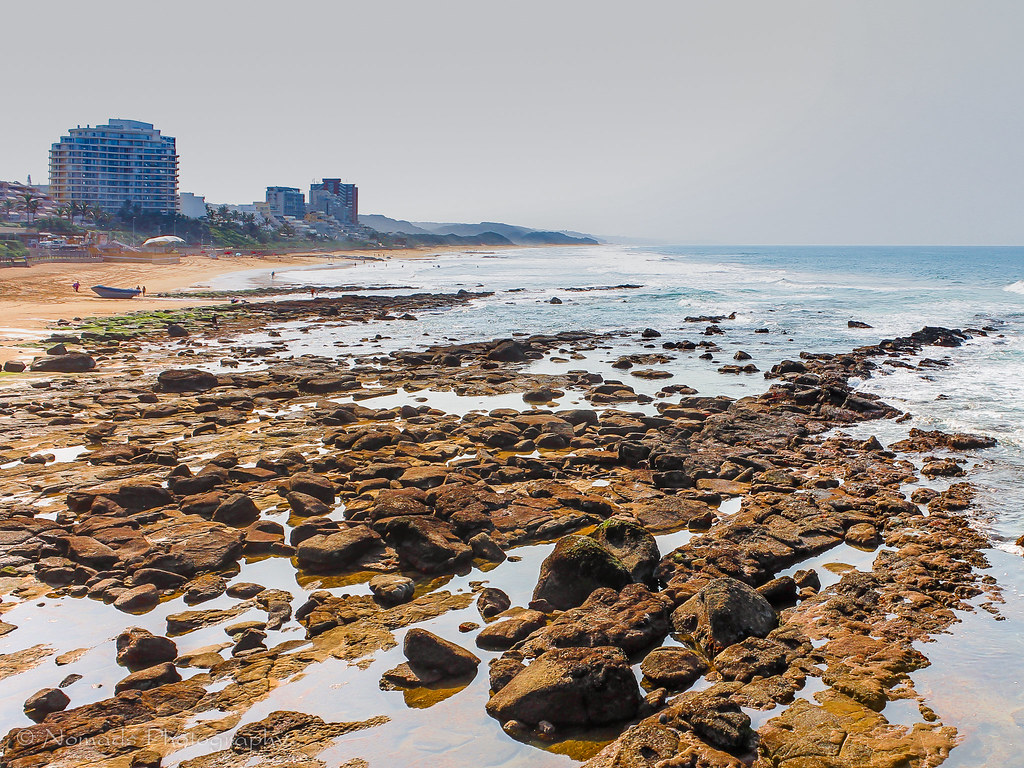
High and low tides are caused by the moon. The moon’s gravitational pull generates something called the tidal force. The tidal force causes Earth—and its water—to bulge out on the side closest to the moon and the side farthest from the moon. These bulges of water are high tides.
* One cycle of tides actually takes 24 hours and 50 minutes.
* The highest tides occur when the moon is new or full.
* High tides sometimes occur either before or after the moon is straight overhead.
* Sometimes there are really low tides called neap tides.
* Some places have only one high tide and one low tide in a cycle (24 hours and 50 minutes).
Info source: https://scijinks.gov/tides/
=========
The photo was taken during June 2014 at Cabana Beach Lifestyle Resort, Umhlanga Rocks, KwaZulu-Natal, South Africa.

Retracted

Ripples

Robberg Nature Reserve, situated 8km south of Plettenberg Bay on the Garden Route, is not only a nature reserve but also a national monument. Rocks from this region date back 120 million years to the break-up of Gondwanaland and evidence of middle and later Stone Age inhabitation has been found in a few of the caves along the peninsula. Visitors can find out more at the Nelson Bay Cave interpretive centre. Some highlight features of a visit here include spotting the rare blue duiker, the Western Cape’s smallest antelope; walking alongside one of the seven climbing-falling dunes on the Cape coastline; and viewing the highest navigational light on the South African coastline, at the Cape Seal Lighthouse (146m above sea level). The reserve also extends 1.8km offshore, providing protection to a range of vulnerable fish species. Visitors can expect inspiring landscapes, exciting dolphin and whale sightings in season, and to be accompanied on their walks or hikes by a variety of bird species and the occasional seal. An overnight hut is available for those who want to spend more time on this beautiful reserve.
Info source: https://www.plett-tourism.co.za/activity/robberg-nature-reserve/
=========
The photo was taken during October 2016 at Robberg Nature Reserve, Plettenberg Bay, Western Cape, South Africa.

Ripples