Poise

The Cape gull is largely sedentary, and large colonies tend to stick to a favoured beach or coastal area. They frequently converge at popular feeding sites and have been known to attack prey en masse. This black and white gull is a common visitor to the beaches of the country. The back and the tops of its wings are black; while the belly, head and tail are white. There are also white tips on the wings, called mirrors. The legs are a green-tinged yellow, which goes a brighter hue of yellow during the breeding season; and the bill is yellow with a vivid red spot on the underside. Juveniles have a mottled-grey plumage, duller colouring on their legs, and a black bill. They take about three years to mature. The Cape gull has a shorter bill and a more angular head and is differentiated by its pristine white tail and its dark-coloured eye.
Info source: https://www.sa-venues.com/wildlife/birds_cape_gull.php
=========
The photo was taken during October 2016 at Beacon Isle Hotel, Plettenberg Bay, Western Cape, South Africa.
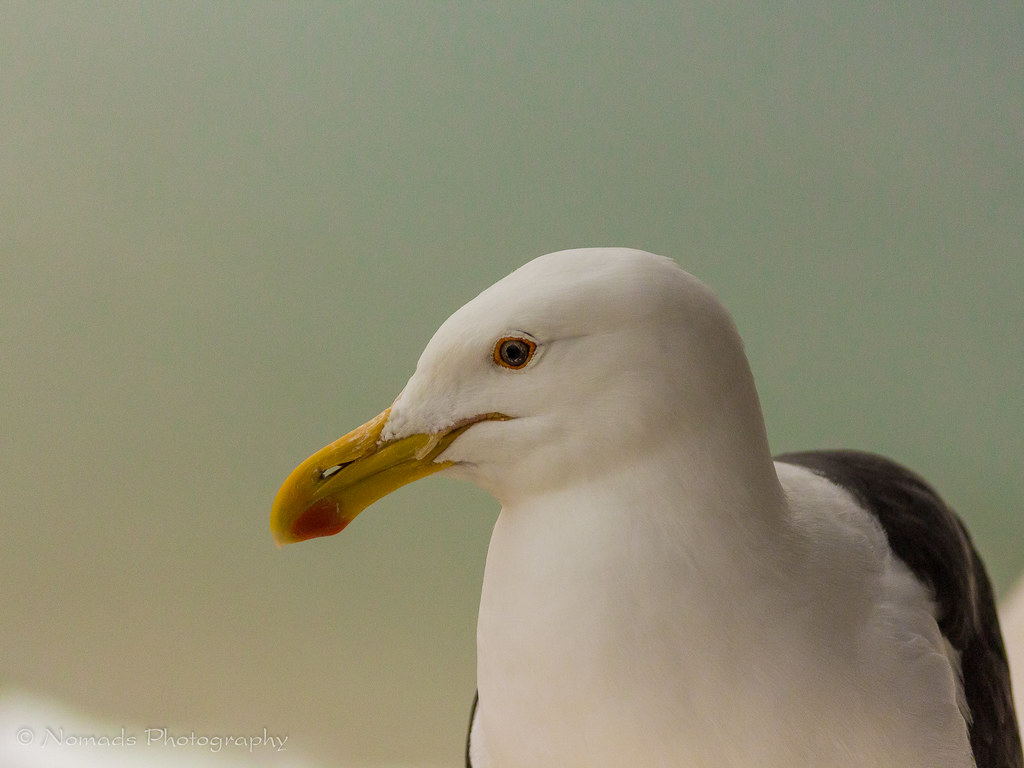
Poise

Majestic

Ancient cultures in Africa revered the giraffe, as some modern cultures do today and commonly depicted it in prehistoric rock and cave paintings. Unknown outside of Africa, early written records described the giraffe as “magnificent in appearance, bizarre in form, unique in gait, colossal in height and inoffensive in character.” The giraffe’s high shoulders and sloping back give the impression that its front legs are much longer than the hind legs, but they are in fact only slightly longer. The giraffe has a distinctive walking gait, moving both legs on one side forward at the same time. At a gallop, however, the gait changes, and the giraffe simultaneously swings the hind legs ahead of and outside the front legs, reaching speeds of 35 miles an hour. Its heavy head moves forward with each powerful stride, then swings back to stay balanced. Giraffes have “horns”; not true horns but knobs covered with skin and hair above the eyes to protect the head from blows.
Info source: https://www.sa-venues.com/wildlife/wildlife_giraffe.php
=========
The photo was taken during February 2018 at Mabula Private Game Reserve, Rooiberg, Bela-Bela, Limpopo, South Africa.

Majestic

Poser

As its name would indicate, the waterbuck inhabits areas that are close to the water in savanna grasslands, gallery forests, and riverine woodlands south of the Sahara. Such habitats not only provide sustenance but long grasses and watery places in which to hide from predators. These antelopes are large, robust animals; males are generally about 25 % larger than the females. They have large, rounded ears and white patches above the eyes, around the nose and mouth, and on the throat. Only the males have horns, which are prominently ringed and as long as 100 centimetres (40 inches). The horns are widely spaced and curve gracefully back and up. They are sometimes used with lethal results when males fight one another over territories. They have a shaggy brown­-gray coat that emits a smelly, oily secretion thought to be for waterproofing.
Info source: https://www.awf.org/wildlife-conservation/waterbuck
=========
The photo was taken during May 2018 in Kruger National Park, Mpumalanga, South Africa.

Poser