Poser

The grey go-away-bird, also known as grey lourie, grey loerie, or kwêvoël, is a bold and common bird of the southern Afrotropics. They have an almost uniform smoky-grey plumage with long tails and (similar to mousebirds) a wispy, back-swept crest of some 6 to 7 cm in length. The crest can be raised almost vertically when excited. The strong, decurved beak is black and the gape and tongue strikingly pink. The plumage is darkest grey on the chin and throat, and palest around the eyes and on the belly. The breast plumage is washed slightly olive like that of its near relative, the bare-faced go-away-bird.
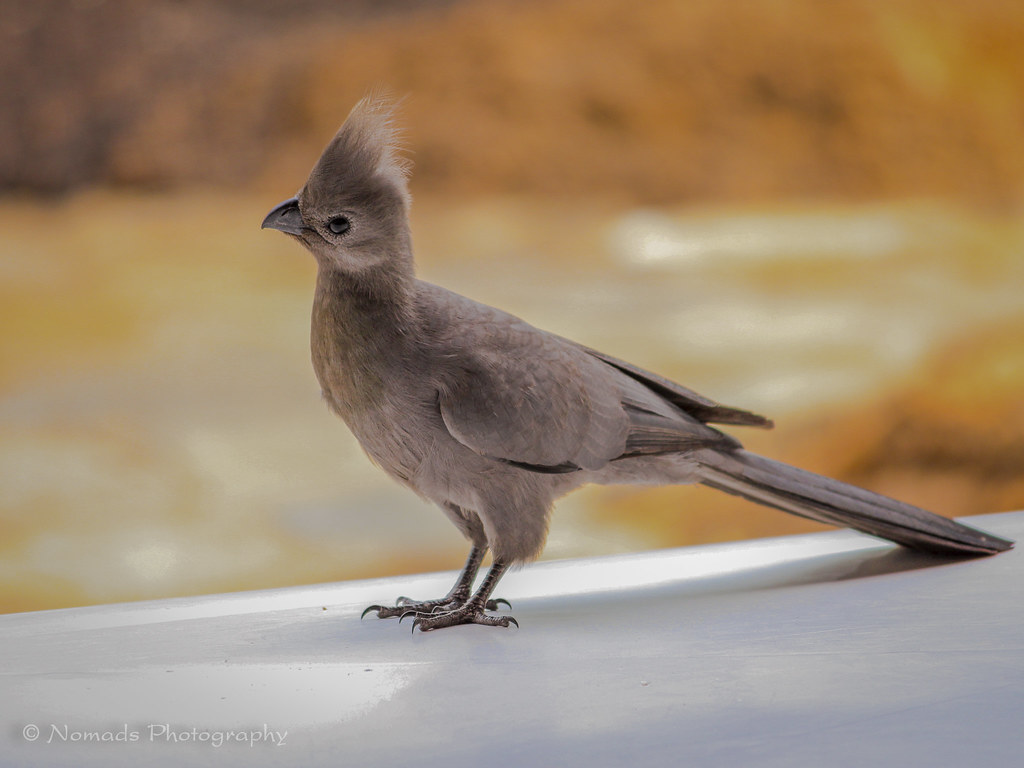
Poser

Curious

Standing at only 30 cm tall, meerkats, also known as suricates, have captured the attention of television and film audiences around the world because of their endearing appearance and interesting social behavior. They depend on group cooperation to survive. They live in groups of 20 to 50 extended family members in large underground tunnels. These family groups, called gangs or mobs, are led by an alpha pair, with the female being dominant. Meerkats have a life span of up to ten years.

Curious

Porthole

Fort Klapperkop had guns mounted on ramparts that could be revolved and fired through numerous openings for maximum firepower in any direction. Trenches and barbed wire further prevented infantry infiltration. The fort harnessed the latest communication systems, which saw the telegraph rooms equipped with telephones. The fort had unique features – it was built with a moat around it and a drawbridge, but the moat was never filled with water. The fort was supplied with running water from a pump station that it shared with Fort Schanskop and electricity was generated by a paraffin engine.

Porthole