Arrogant

Yellow-billed hornbills feed mainly on the ground, where they forage for seeds, small insects, spiders and scorpions. This hornbill species is a common and widespread resident of dry thornveld and broad-leafed woodlands. They can often be seen along roads and watercourses. It is a medium-sized bird and is characterized by a long yellow and down-curved beak. This beak is huge in comparison to its body. They have a white belly, grey neck, and black plumage with abundant white spots and stripes. The neck has grey spots and the chest is lightly striated with black.

Arrogant

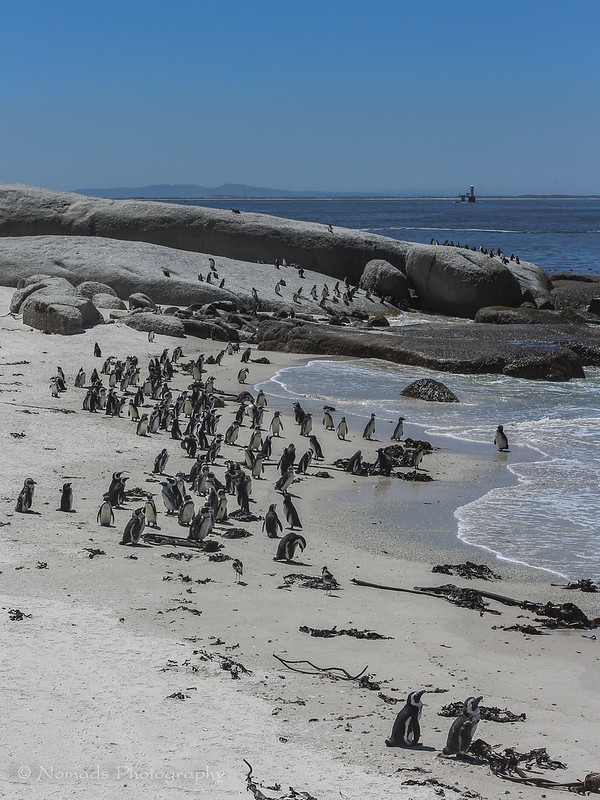
Colony

The Boulders Penguin Colony was established in 1983 and numbers increased from surrounding island colonies to bring breeding numbers to 3 900 birds in 2005. Since then there has been a decrease. The 2011 figures sit at around 2100 birds at Boulders Penguin Colony. The decline at Boulders and the global decline is the suspected result of:
* habitat destruction
* effects of oil spills and other marine pollution
* impacts of global warming on fish stocks and fish movement
* overfishing
* irresponsible tourism activities
* domestic pets/animals

Colony

Perched

The African stonechat is a species of the Old World flycatcher family. The males have a black head, a white half-collar, a black back, a white rump, and a black tail; the wings are black with a large white patch on the top side of the inner wing. The upper breast is usually dark orange-red, with a sharp or gradual transition to white or pale orange on the lower breast and belly depending on subspecies. In a few, black replaces the orange breast feathers in part or entirely. Its scientific name refers to its appearance and habitat and means “collared rock-dweller”.
PS: First time I’ve seen a tick on a bird?

Perched