Poise

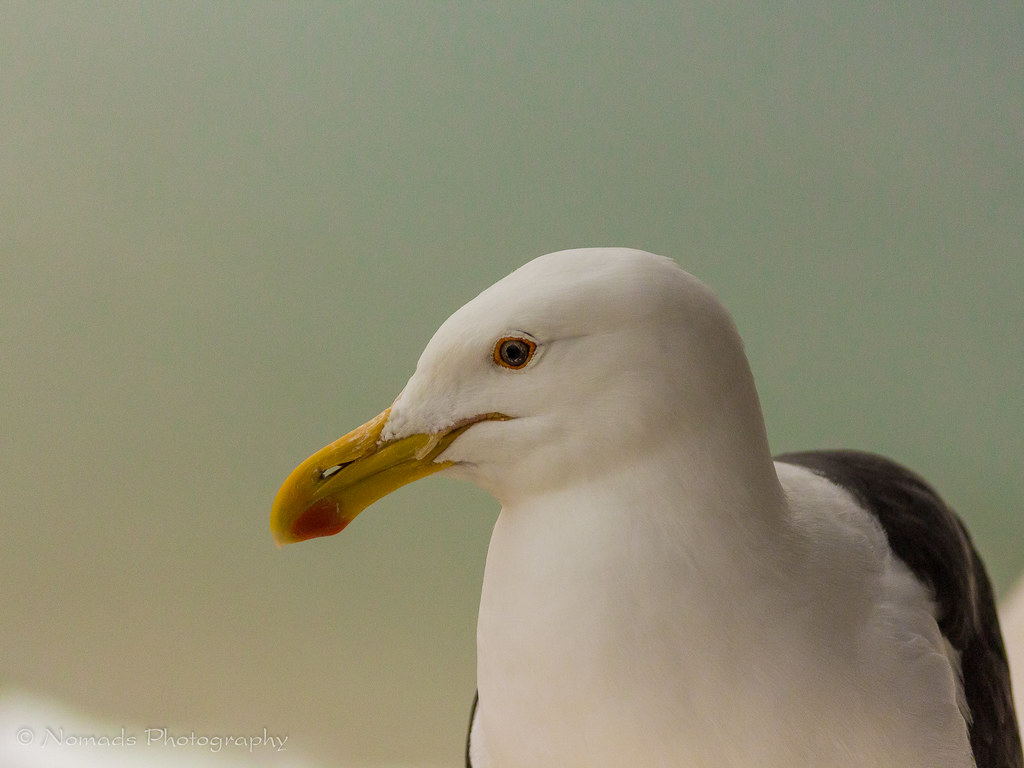
The Cape gull is largely sedentary, and large colonies tend to stick to a favoured beach or coastal area. They frequently converge at popular feeding sites and have been known to attack prey en masse. This black and white gull is a common visitor to the beaches of the country. The back and the tops of its wings are black; while the belly, head and tail are white. There are also white tips on the wings, called mirrors. The legs are a green-tinged yellow, which goes a brighter hue of yellow during the breeding season; and the bill is yellow with a vivid red spot on the underside. Juveniles have a mottled-grey plumage, duller colouring on their legs, and a black bill. They take about three years to mature. The Cape gull has a shorter bill and a more angular head and is differentiated by its pristine white tail and its dark-coloured eye.
Info source: https://www.sa-venues.com/wildlife/birds_cape_gull.php
=========
The photo was taken during October 2016 at Beacon Isle Hotel, Plettenberg Bay, Western Cape, South Africa.
Poise

Flurry

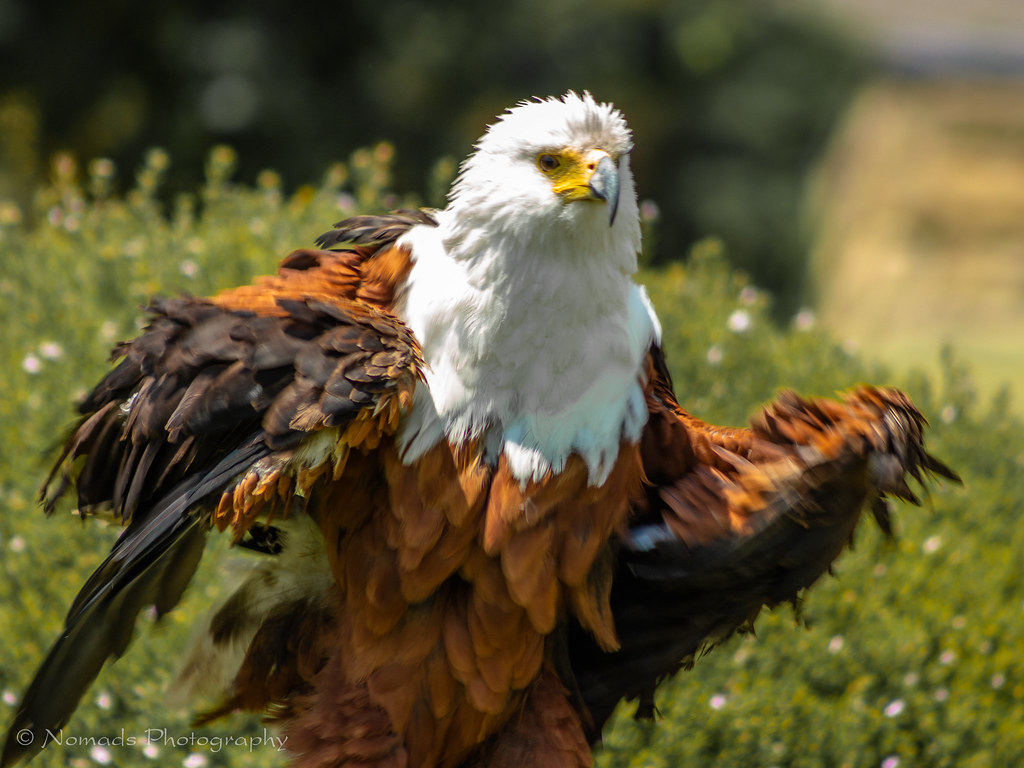
The African fish eagle feeds mainly on fish, which it swoops down upon from a perch in a tree, snatching the prey from the water with its large, clawed talons. The eagle then flies back to its perch to eat its catch. Like other sea eagles, the African fish eagle has structures on its toes called spicules that allow it to grasp fish and other slippery prey. The osprey, a winter visitor to Africa, also has this adaptation. Should the African fish eagle catch prey over ten times their own body weight, it is too heavy to allow the eagle to get lift, so it instead drags the fish across the surface of the water until it reaches the shore. If it catches a fish too heavy to allow the eagle to sustain flight, it will drop into the water and paddle to the nearest shore with its wings. The African fish eagle is known to steal the catch of other bird species (such as goliath herons) in a behaviour known as kleptoparasitism. It also feeds on birds especially waterbirds such as ducks, greater and lesser flamingos, small turtles and terrapins, baby crocodiles, lizards, frogs, and carrion. Occasionally, it may even carry off mammalian prey, such as hyraxes and monkeys. It has also been observed feeding on domestic fowl (chickens).
Info source: https://en.wikipedia.org/wiki/African_fish_eagle
=========
The photo was taken during October 2018 at The Falcon Ridge Bird of Prey Centre, Champagne Valley, Drakensberg, KwaZulu-Natal, South Africa.

Flurry

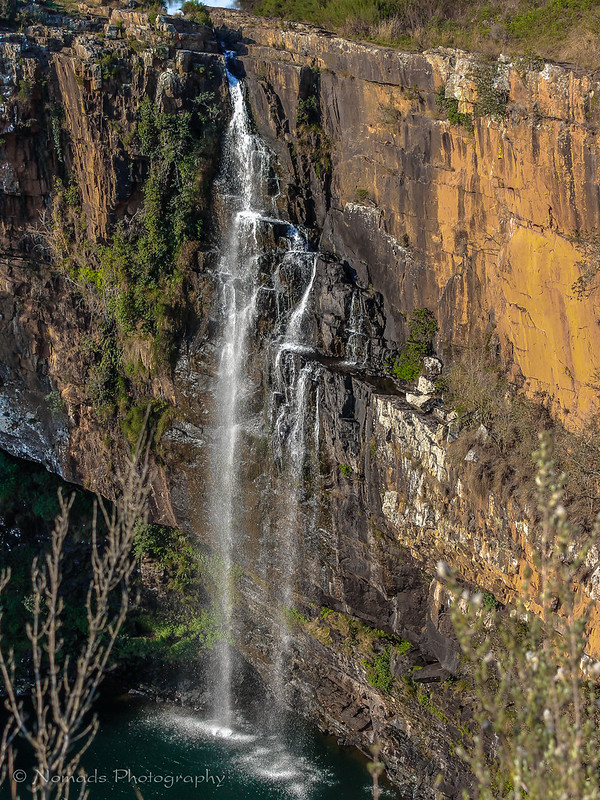
Candle

The Berlin Falls is a waterfall in Mpumalanga, South Africa. They are located close to God’s Window and the highest waterfall in South Africa’s Mpumalanga province, Lisbon Falls. The Berlin Falls cascade from the centre of a sheer cliff that stands roughly 80m tall. The shape of the falls is likened to a giant candle. A narrow, natural channel at the top of the falls creates the ‘wick’ of the candle, and as the water drops from this point, it fans out creating the rest of the candle before emptying out into the pool below. Berlin Falls gets its name from miners who ventured to South Africa from Europe during the gold rush and named each waterfall in the region after their home towns, or places from their home countries. The falls are on the Sabine River and fall 80 metres (260 ft), dumping into a circular basin flanked by red cliffs.
Info source: https://en.wikipedia.org/wiki/Berlin_Falls
=========
The photo was taken during August 2013 at Berlin falls, God’s Window, Mpumalanga, South Africa.

Candle