Lifeguards

Llandudno Beach is one of the Cape’s most naturally diverse beaches, surrounded by large granite boulders and overlooked by mountains. It is a popular surfing spot, but the swimming can be treacherous, with rough seas and extremely cold water. Llandudno has lifeguards on duty during the summer season, operated by the Llandudno Surf Lifesaving club. It is also the access point for the walk to Sandy Bay, an isolated beach still popular with nudists. On 26 September 1903 the valley was declared a township and named Llandudno after the North Wales seaside resort of Llandudno, which means “Parish of Saint Tudno” in the Welsh language. The striking similarities between Kleinkommetjie Bay in which the valley resides and Llandudno in Wales were noted as reasons for choosing this name.
Info source: https://en.wikipedia.org/wiki/Llandudno,_Cape_Town
=========
The photo was taken during October 2014 at Llandudno, Western Cape, South Africa.

Lifeguards

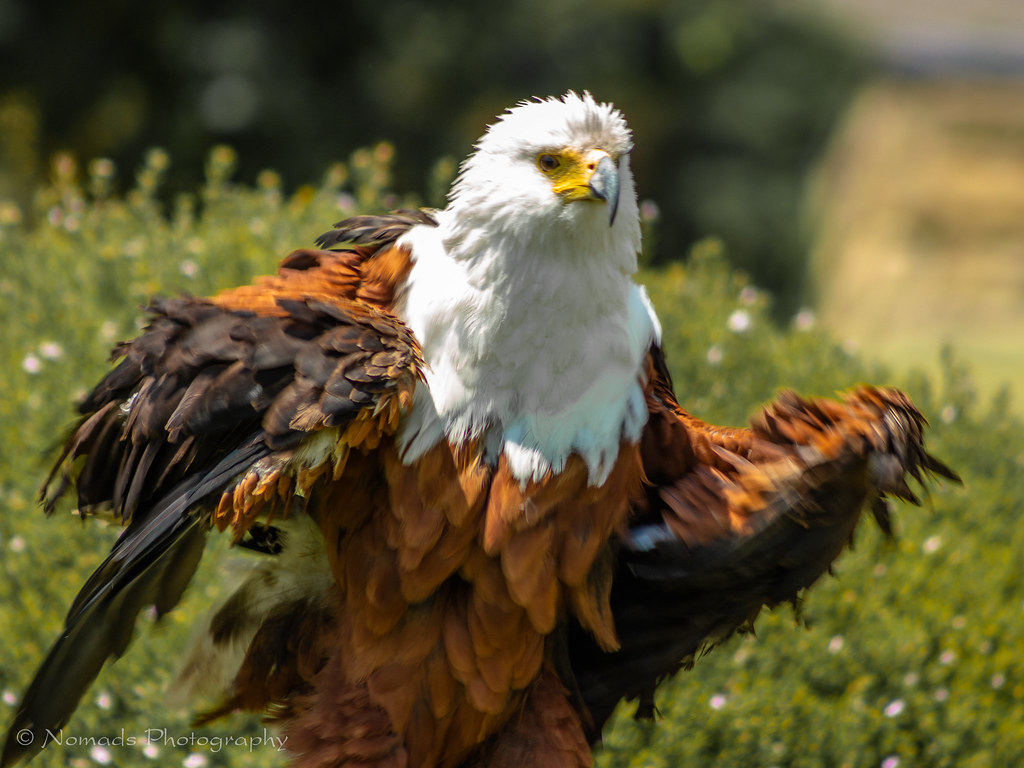
Flurry

The African fish eagle feeds mainly on fish, which it swoops down upon from a perch in a tree, snatching the prey from the water with its large, clawed talons. The eagle then flies back to its perch to eat its catch. Like other sea eagles, the African fish eagle has structures on its toes called spicules that allow it to grasp fish and other slippery prey. The osprey, a winter visitor to Africa, also has this adaptation. Should the African fish eagle catch prey over ten times their own body weight, it is too heavy to allow the eagle to get lift, so it instead drags the fish across the surface of the water until it reaches the shore. If it catches a fish too heavy to allow the eagle to sustain flight, it will drop into the water and paddle to the nearest shore with its wings. The African fish eagle is known to steal the catch of other bird species (such as goliath herons) in a behaviour known as kleptoparasitism. It also feeds on birds especially waterbirds such as ducks, greater and lesser flamingos, small turtles and terrapins, baby crocodiles, lizards, frogs, and carrion. Occasionally, it may even carry off mammalian prey, such as hyraxes and monkeys. It has also been observed feeding on domestic fowl (chickens).
Info source: https://en.wikipedia.org/wiki/African_fish_eagle
=========
The photo was taken during October 2018 at The Falcon Ridge Bird of Prey Centre, Champagne Valley, Drakensberg, KwaZulu-Natal, South Africa.

Flurry

Guardian

Guardian
The chacma baboon usually lives in social groups, called troops, which are composed of multiple adult males, adult females, and their offspring. Occasionally, however, very small groups form that consist of only a single adult male and several adult females. Chacma troops are characterized by a dominance hierarchy. Female ranking within the troop is inherited through the mother and remains relatively fixed, while the male ranking is often in flux, especially when the dominant male is replaced. Chacmas are unusual among baboons in that neither males nor females form strong relationships with members of the same sex. Instead, the strongest social bonds are often between unrelated adult males and females. Infanticide is also common, compared to other baboon species, as newly dominant males will often attempt to kill young baboons sired by the previously dominant male. Baboon troops possess a complex group behaviour and communicate by means of body attitudes, facial expressions, vocalizations and touch.
Info source: https://en.wikipedia.org/wiki/Chacma_baboon
The photo was taken during February 2019 Mabula Private Game Reserve, Rooiberg, Limpopo, South Africa.
📷 Mariaan Buys

Guardian