Fan

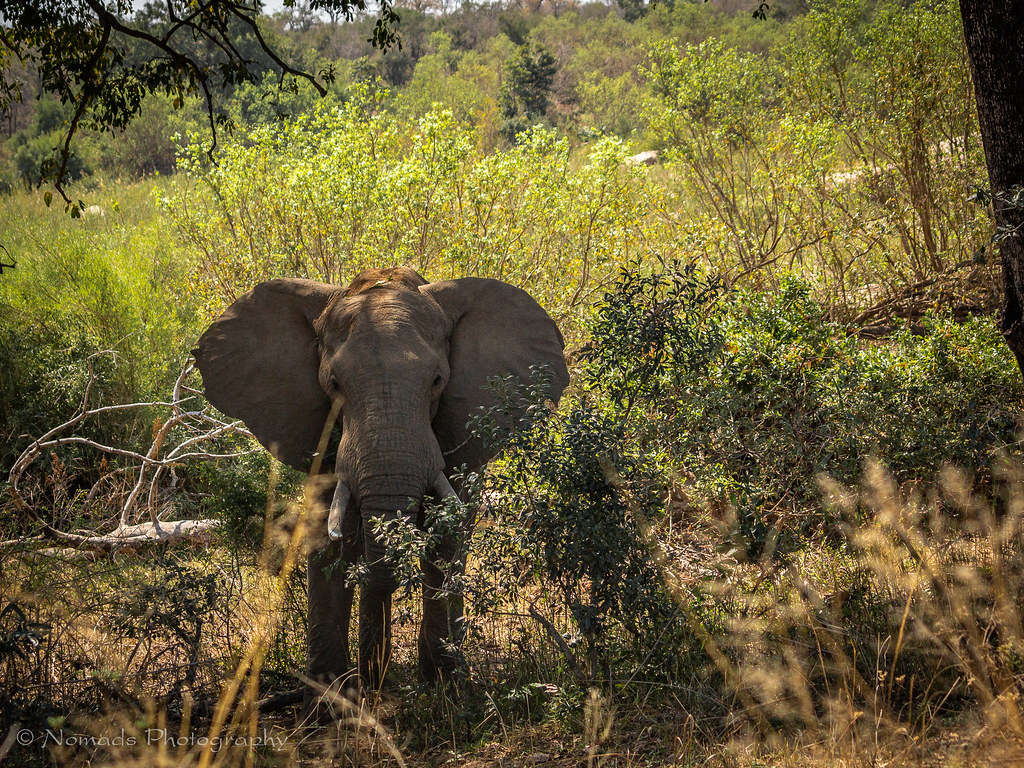
Flapping of the ears helps to cool an elephant in two ways. In addition to enabling the ears to act as a fan and move air over the rest of the elephant’s body, flapping also cools the blood as it circulates through the veins in the ears. As the cooler blood re-circulates through the elephant’s body, the animal’s core temperature will decrease several degrees.
Info source URL: https://elephantconservation.org/elephants/just-for-kids/
=========
The photo was taken during September 2017 near Tshokwane Picnic Site, Kruger National Park, Mpumalanga, South Africa.
Fan

Peek

The King Cheetah, also known as Cooper’s Cheetah, was once thought to be a separate sub-species. But it is actually an African Cheetah exhibiting a rare fur pattern mutation. A recessive gene must be inherited from both parents in order for this “blotchy” pattern to appear. First discovered in Zimbabwe in 1926, this very rare animal has been seen in the wild only 6 times. It has been known to exist in Zimbabwe, Botswana and in the northern part of South Africa’s Transvaal province. The De Wildt Cheetah Research Centre in South Africa specializes in breeding this cat in captivity.
=========
The photo was taken during October 2017 at Ann van Dyk Cheetah Centre, De Wildt, Pretoria, South Africa.
Info source URL: http://www.cheetahspot.com/king.php

Peek

Misty

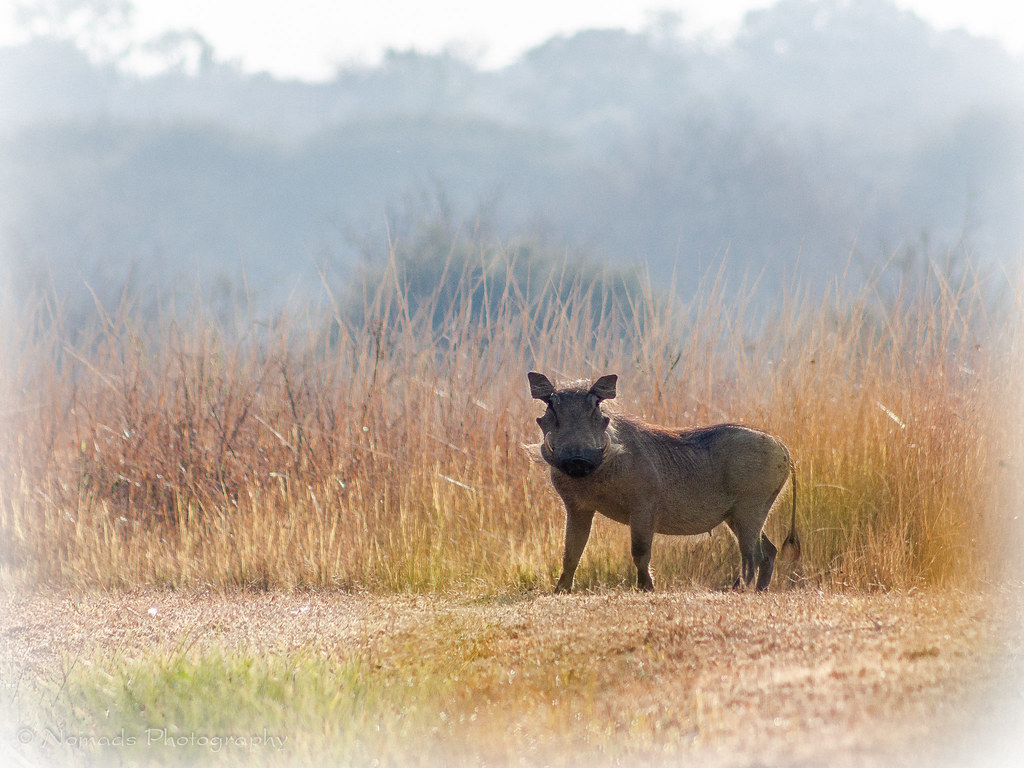
Warthogs, as one might guess from the name, are members of the Swine family and are related to pigs, boars and hogs. And as the name also suggests, warthogs have patches on their faces that look like warts but are just thick growths of skin. These patches act as padding for when males fight during mating season.
=========
The photo was taken during June 2016 at De Kleine Serengeti Game Lodge, Rust de Winter, Gauteng, South Africa.

Misty